

When homeowners look at a roof, they usually notice the shingles, colour, age, or overall condition first. One important feature receives much less attention even though it influences how the entire roofing system manages Ottawa weather: roof pitch.
Roof pitch describes how steeply a roof rises. Some homes have relatively low-sloped roof sections, while others have steep, prominent rooflines. This difference affects much more than appearance. Pitch influences how quickly rainwater drains, how snow accumulates and moves, how roofing materials are installed, and how certain areas respond to ice and seasonal moisture.
For homeowners in Orleans and Gloucester, understanding roof pitch is particularly useful because roofs must perform through substantial seasonal changes. Heavy snow, spring melting, rainfall, freezing temperatures, strong winds, and summer heat can all interact differently with roofs depending on their slope and design.
A steeper roof is not automatically better, and a lower slope is not automatically a problem. Each roof needs materials, installation details, drainage, flashing, and maintenance practices appropriate for its design.
What Does Roof Pitch Mean?
Roof pitch describes the relationship between vertical rise and horizontal distance.
For example, a roof described as having a 6:12 pitch rises approximately six inches for every twelve inches of horizontal run.
A lower first number represents a shallower roof.
A higher number represents a steeper roof.
Homeowners do not need to calculate their roof pitch themselves to understand why it matters. The important point is that roof slope influences how water, snow, and roofing materials behave.
Why Roof Pitch Matters for Water Drainage
One of the fundamental jobs of a residential roof is shedding water.
As rain reaches the roofing surface, gravity moves it toward the lower roof edge and eventually into the drainage system.
Pitch affects how quickly that happens.
On a steeper roof, water generally moves downward more quickly. On a lower-sloped surface, water moves more slowly and spends more time travelling across roofing materials.
That difference influences how the roofing assembly needs to be designed.
A roof should never depend on shingles alone. Underlayment, flashing, valleys, penetrations, eaves, gutters, and installation details all contribute to proper water management.
Lower Roof Slopes Require Careful Water Management
Asphalt shingles are primarily designed as water-shedding materials rather than completely waterproof membranes.
This distinction matters.
On a sufficiently steep roof, gravity helps move water downward before it can exploit small vulnerabilities.
As roof slope decreases, water drains more slowly.
Wind-driven rain may also have more opportunity to move beneath vulnerable areas if installation details are inadequate.
For this reason, asphalt shingle manufacturers establish minimum slope requirements and may require additional underlayment provisions at lower permitted slopes.
Homeowners should therefore avoid assuming that any roofing material can simply be installed on any roof shape.
Why Installation Requirements Can Change With Pitch
Roof pitch affects more than drainage speed.
It can influence how roofing components must be installed.
A lower-slope asphalt shingle application may require additional protection beneath the shingles, depending on the roofing product, building requirements, and manufacturer specifications.
This reinforces an important principle: the visible shingles are only one layer of a complete roofing system.
Beneath them may be:
- Underlayment
- Ice and water protection
- Roof decking
- Flashing
- Ventilation components
- Eave protection
All these elements need to work together according to the roof’s design.
Roof Pitch Also Influences Snow Behaviour
Ottawa homeowners spend a substantial part of the year thinking about snow.
Roof pitch affects how snow accumulates and moves.
A lower-sloped roof may retain snow differently from a steep roof because gravity has less influence pulling it downward.
Steeper roofs may shed snow more readily under certain conditions, although snow does not automatically slide off every steep roof.
Snow behaviour also depends on:
- Snow type
- Temperature
- Roofing material
- Sun exposure
- Roof orientation
- Wind
- Ice beneath the snow
- Roof geometry
Pitch is therefore an important factor, but it is not the only one.
Snow That Remains on the Roof Adds Weight
Snow has weight, and its density can vary considerably.
Light, freshly fallen snow is different from wet snow or snow that has experienced repeated melting and refreezing.
As snow remains on a roof, weather changes can alter its characteristics.
A layer may become wetter, denser, or partially frozen.
Roofs are designed with environmental loads in mind, but unusual accumulations or concerning structural symptoms should always be professionally evaluated.
Homeowners should not climb onto snow-covered roofs to investigate them.
Steeper Roofs Can Shed Snow Suddenly
A steep roof may reduce prolonged snow accumulation in some circumstances, but it introduces another consideration: sliding snow.
When a large section releases, it can move quickly toward the roof edge.
Depending on the home, sliding snow may affect areas near:
- Entrances
- Walkways
- Driveways
- Decks
- Lower roof sections
- Gutters
Roof design therefore involves managing not only how much snow remains on the roof but also where it goes when it moves.
Lower Roof Sections Can Receive Snow From Above
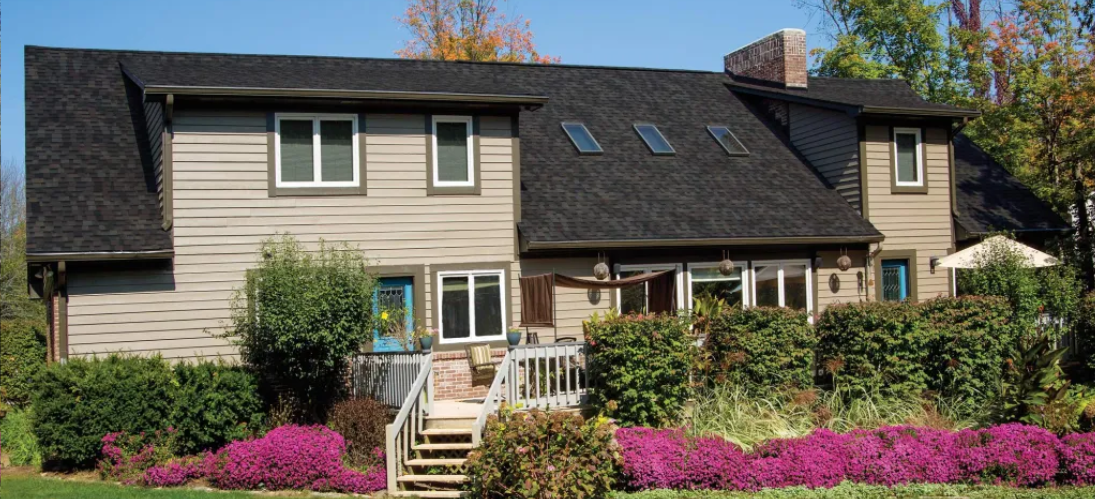
Many homes have multiple roof levels.
A steep upper roof may release snow onto a lower roof.
This means the lower section can receive both direct snowfall and additional snow from above.
These transition areas deserve careful attention because they may experience concentrated:
- Snow
- Ice
- Meltwater
- Physical impact
The overall roof geometry matters more than evaluating each slope independently.
Roof Pitch Influences Spring Snowmelt
Spring creates another important test.
As temperatures rise, accumulated snow begins melting.
Water then needs to move safely down the roofing surface.
On a steep roof, meltwater may drain relatively quickly.
On lower slopes, movement may be slower.
If debris, remaining ice, damaged shingles, or flashing problems interfere with drainage, spring snowmelt may reveal vulnerabilities that were hidden throughout winter.
Ice Can Change Normal Drainage Patterns
A roof may have adequate pitch for normal water movement but behave very differently once ice forms.
Ice can create temporary barriers.
Meltwater travelling down the roof may encounter frozen areas near eaves, valleys, or shaded sections.
If water cannot continue moving downward, it can accumulate behind the obstruction.
This is one reason ice dams deserve attention on Ottawa homes.
Roof pitch influences water movement, but attic heat loss, insulation, air sealing, ventilation, snow conditions, and roof geometry also contribute to ice-dam behaviour.
Pitch Alone Does Not Prevent Ice Dams
A steep roof should not be considered automatically immune to ice dams.
If heat escaping from the home causes snow to melt on an upper roof section, that water may still reach a colder area and refreeze.
Likewise, complex steep roofs can contain valleys, dormers, and intersections where snow and ice behave differently.
Managing recurring ice dams requires understanding the entire roof and attic system rather than relying on pitch alone.
Valleys Behave Differently From Open Roof Slopes
Roof valleys form where two sloping roof planes meet.
They concentrate water from both sides into a narrower drainage path.
Even on a relatively steep roof, valleys may collect:
- Snow
- Ice
- Leaves
- Twigs
- Other debris
This makes valleys important inspection areas.
A roof’s overall pitch may be excellent for drainage while a blocked or damaged valley still creates a localized water problem.
Dormers Add Complexity to Roof Drainage
Dormers create additional intersections and changes in roof slope.
Water needs to move around these structures while flashing protects the transitions between roofing and vertical walls.
Snow may also accumulate differently beside dormers.
Homes with multiple dormers therefore have more than one “pitch” to consider.
The relationships between roof sections are just as important as the steepness of the main roof.
Chimneys Can Interrupt Water and Snow Movement
A chimney creates another obstruction.
Water and melting snow travelling down a roof must move around it.
On the upslope side, snow or debris may accumulate.
Proper flashing helps redirect water around the chimney and back onto the roofing surface.
On complex roofs in Orleans or Gloucester, the combination of pitch, chimney position, valleys, and surrounding roof planes can create unique drainage patterns.
Roof Vents Need Proper Integration Too
Roof vents create penetrations through the roofing system.
Their flashing must be properly integrated with the shingles so water moving downslope passes over protective layers rather than underneath them.
The faster water moves does not eliminate the need for good flashing.
Likewise, a lower slope makes correct detailing even more important because water may remain near vulnerable areas longer.
Wind-Driven Rain Can Challenge Normal Drainage
Gravity normally moves rain downward.
Wind can change that.
Strong wind may push rain sideways or toward shingle edges and roof penetrations.
This means pitch cannot be considered independently of flashing and installation quality.
A roofing system should be designed so ordinary drainage and more demanding weather conditions are both managed effectively.
Roof Pitch Can Affect Shingle Wear Patterns
Shingles across the same house may not all age identically.
Pitch can contribute to these differences.
Different roof planes may receive different amounts of:
- Sunlight
- Rain
- Snow
- Wind
- Debris
A steep south-facing section may experience significant sunlight, while a lower shaded section may remain damp longer.
These environmental differences can produce uneven aging across the roof.
Sun Exposure Matters Alongside Pitch
Roof orientation and pitch determine how directly sunlight reaches different roof planes.
Strong UV exposure contributes to asphalt shingle aging.
Over time, shingles may experience:
- Granule loss
- Drying
- Brittleness
- Cracking
- Colour changes
A roof inspection should therefore consider both slope and orientation when evaluating material condition.
Shaded Slopes May Dry More Slowly
Trees and nearby structures can shade portions of a roof.
A lower-pitched shaded section may retain moisture longer after rainfall or snowmelt than an exposed, steeply pitched area.
Persistent dampness can encourage:
- Moss
- Algae
- Organic debris retention
This does not mean every shaded roof has a problem.
It does mean those sections may require additional monitoring.
Moss Can Interfere With Shingle Performance
Moss tends to grow in cool, damp, shaded areas.
If it becomes established between shingles, it can retain moisture and potentially affect how shingles lie against the roof.
Aggressive pressure washing or scraping can damage asphalt shingle granules, so homeowners should avoid attempting harsh DIY cleaning methods.
The cause of persistent moisture should also be considered.
Pitch Influences How Debris Moves
Leaves and twigs may slide relatively easily from some steep roof surfaces.
On lower pitches, they can remain in place longer.
Roof geometry can also trap debris regardless of slope.
Common collection points include:
- Valleys
- Behind chimneys
- Beside dormers
- Near roof-to-wall intersections
- Around certain penetrations
Once debris becomes wet, it can hold moisture against roofing materials.
Gutters Still Matter on Steep Roofs
A steep roof may move water quickly, but that water still needs somewhere to go.
Gutters must be able to receive runoff and direct it toward downspouts.
During heavy rain, concentrated water arriving from a steep roof can place considerable demand on the drainage system.
Blocked or damaged gutters can undermine otherwise effective roof drainage.
Roof pitch and gutter performance therefore need to be considered together.
Eaves Are Important on Every Roof Pitch
The eave is where water leaves the roofing surface.
During Ottawa winters, it is also a common location for ice-related problems.
Eave protection, appropriate underlayment, drainage, and roof-edge detailing all contribute to long-term performance.
Lower slopes may require particular attention to water protection because drainage occurs more slowly, but steep roofs also need properly designed eaves.
Why Orleans Homes Can Have Very Different Roof Designs
Orleans contains residential development from many different periods.
One street may contain straightforward gable roofs, while another includes homes with:
- Multiple roof planes
- Dormers
- Attached garages
- Lower porch roofs
- Valleys
- Complex intersections
Two neighbouring houses can therefore experience snow and water very differently.
Maintenance recommendations should be based on the individual roof rather than simply the neighbourhood.
Gloucester Homes Can Be Equally Varied
Gloucester includes established neighbourhoods, newer residential areas, and properties with widely different architectural designs.
Some roofs are steep and simple.
Others contain numerous transitions.
For homeowners, this means roof pitch should be considered alongside:
- Roof age
- Roofing material
- Attic conditions
- Drainage
- Tree coverage
- Flashing
- Previous repairs
No single factor tells the entire story.
A Steep Roof Is Not Automatically a Longer-Lasting Roof
It can be tempting to assume that faster drainage means a steep roof will always last longer.
Roof longevity is more complicated.
Shingle performance depends on factors including:
- Material quality
- Installation
- Ventilation
- Roof deck condition
- Flashing
- Weather exposure
- Maintenance
- Storm damage
Pitch influences performance, but it cannot compensate for poor installation or neglected maintenance.
A Lower-Pitched Roof Is Not Automatically Defective
The opposite assumption is equally misleading.
A properly designed lower-pitched roof can perform reliably when appropriate materials and installation methods are used.
Problems arise when materials are installed outside their suitable slope range or when water-management details are inadequate.
The roofing system needs to match the roof geometry.
Why Underlayment Becomes So Important
Shingles are the visible exterior covering, but underlayment provides an additional protective layer beneath them.
Its importance becomes particularly clear in vulnerable locations or lower-slope applications.
Depending on the roofing system and manufacturer requirements, enhanced underlayment provisions may be required.
This hidden layer can provide additional protection if wind-driven rain or other moisture gets beneath the shingles.
Ice and Water Protection Adds Another Defensive Layer
Cold-climate roofs often incorporate specialized self-adhering protection in vulnerable areas.
Depending on the roofing design and applicable requirements, these materials may be used around:
- Eaves
- Valleys
- Penetrations
- Other leak-prone locations
They are designed to provide additional protection where water backup or concentrated drainage may occur.
Because this material is hidden beneath shingles, homeowners may not know whether it is present without documentation or professional evaluation.
Roof Pitch Matters During Replacement Planning
When replacing a roof, contractors should evaluate the slope before recommending materials and installation methods.
Important questions include:
- Is the roof suitable for asphalt shingles?
- Are there lower-slope sections?
- What underlayment is required?
- Where is additional water protection needed?
- How do different roof planes connect?
- Where does snow naturally accumulate?
- How is runoff directed?
These questions help create a roofing system suited to the actual building rather than simply replacing old shingles with new ones.
Additions Can Create Problematic Slope Transitions
Home additions sometimes introduce lower roof sections.
Examples include:
- Porches
- Sunrooms
- Garage additions
- Rear extensions
The new roof may connect directly beneath a steeper existing roof.
This can create an area that receives concentrated runoff or sliding snow from above.
These transitions need particularly careful design and flashing.
Previous Renovations Deserve Attention
Older homes may have undergone several renovations.
A roofline that appears intentional today may include sections added decades apart.
Different slopes may have:
- Different roofing materials
- Different underlayment
- Different flashing
- Different ages
When problems develop around a transition, understanding the history of the roof can help identify the cause.
Roof Pitch Affects Safe Maintenance
Steeper roofs are more difficult and dangerous to access.
Even lower slopes can become extremely slippery when wet, icy, or covered with debris.
Homeowners should avoid climbing onto roofs to inspect snow accumulation or shingle condition.
Professional roofing contractors have appropriate equipment and experience for evaluating roof surfaces safely.
Never Assume Snow Should Be Removed Because the Roof Looks Full
Seeing substantial snow on a roof can be concerning, but unnecessary removal can create its own risks.
Improper shovelling can damage shingles and flashing.
Walking on snow-covered roofing surfaces is dangerous.
If unusual accumulation or structural concerns exist, professional assessment is safer than attempting rooftop snow removal.
Warning Signs That Pitch-Related Drainage May Need Attention
Homeowners should consider professional inspection when they notice:
- Persistent water near roof transitions
- Repeated leaks on lower roof sections
- Ice forming in the same locations each winter
- Debris repeatedly collecting in valleys
- Premature deterioration on one roof plane
- Moss concentrated on low or shaded areas
- Damaged shingles below upper roof sections
- Recurring gutter overflow
- Ceiling stains after snowmelt
These patterns may help identify how roof geometry is influencing the problem.
Spring Is a Good Time to Observe Drainage
Once winter snow begins melting, homeowners can observe how water moves from the roof from a safe ground-level location.
Look for unusual conditions such as:
- Water spilling over gutters
- Snow remaining unusually long in specific areas
- Ice lingering around roof intersections
- Debris blocking valleys
- Damaged roof edges
Spring provides useful information because the roof is transitioning from snow management back to rainwater drainage.
Fall Is the Time to Prepare
Before another Ottawa winter, a roof should be ready to handle snow and ice.
Fall maintenance may include:
- Clearing gutters
- Removing roof debris
- Inspecting valleys
- Checking flashing
- Reviewing damaged shingles
- Trimming problematic branches
A roof with clear drainage paths is better prepared for winter and eventual spring snowmelt.
Professional Inspection Can Identify Vulnerable Roof Sections
Homeowners do not need to become experts in roof pitch.
A professional roofing assessment can identify:
- Different roof slopes
- Lower-slope vulnerabilities
- Drainage patterns
- Snow collection points
- Flashing concerns
- Shingle deterioration
- Underlayment considerations
- Roof transitions
This is particularly useful when a home has a complex roofline or recurring leaks in the same location.
When Repair May Be Enough
A drainage or shingle problem associated with one roof section does not automatically require full roof replacement.
Localized repair may be appropriate when the issue involves:
- Damaged shingles
- Flashing
- A limited transition area
- A small section of underlayment
- Localized storm damage
The condition of the remaining roofing system should guide the decision.
When Replacement May Need Broader Planning
If a roof has widespread deterioration, repeated leaks, multiple problematic transitions, or aging shingles across several slopes, replacement planning may make more sense.
A replacement project also creates an opportunity to address hidden details beneath the existing shingles.
That can include improving protection around lower slopes, valleys, eaves, and roof penetrations where appropriate.
Roof Pitch Is Only One Part of Roof Performance
It is useful to understand roof pitch, but homeowners should avoid focusing on it in isolation.
A reliable roof depends on the interaction of:
- Pitch
- Shingles
- Underlayment
- Flashing
- Roof decking
- Ventilation
- Insulation
- Gutters
- Maintenance
The strongest roofing systems manage all these elements together.
Final Thoughts
Roof pitch is easy to think of as an architectural feature, but it has a practical influence on how an Ottawa home manages water, snow, ice, and asphalt shingle performance.
For homeowners in Orleans and Gloucester, understanding the slope of different roof sections can help explain why some areas drain faster, why snow accumulates in certain locations, why lower sections may require different installation details, and why valleys and transitions deserve additional attention.
A steep roof is not automatically problem-free, and a lower-pitched roof is not automatically inferior. What matters is whether the roofing materials, underlayment, flashing, drainage, and installation methods are appropriate for that particular slope and roof design.
Seasonal inspections are especially useful in Ottawa because winter can alter how a roof behaves. Snow and ice may temporarily change drainage patterns, while spring meltwater can reveal weaknesses that were previously hidden.
By understanding how roof pitch interacts with the rest of the roofing system, homeowners can make better decisions about maintenance, repairs, and eventual roof replacement while helping protect their homes throughout Ottawa’s changing seasons.
Frequently Asked Questions About Roof Pitch
What is roof pitch?
Roof pitch describes how much a roof rises compared with its horizontal run. A 6:12 pitch, for example, rises approximately six inches for every twelve inches of horizontal distance.
Does a steeper roof drain rainwater faster?
Generally, a steeper slope allows gravity to move water off the roofing surface more quickly. However, proper shingles, flashing, valleys, gutters, and underlayment remain essential regardless of pitch.
Does snow stay longer on a low-pitched roof?
It can. Lower slopes may retain snow differently because gravity has less influence on sliding. Snow behaviour also depends on temperature, wind, roofing material, ice, orientation, and roof geometry.
Are asphalt shingles suitable for every roof pitch?
No. Asphalt shingles have slope limitations, and manufacturer installation requirements must be followed. Lower permitted slopes can require additional underlayment or other protective measures.
Can steep roofs still develop ice dams?
Yes. Ice dams are influenced by heat loss, insulation, air leakage, ventilation, snow conditions, roof geometry, and outdoor temperatures. A steep slope alone does not eliminate the possibility.
Why does one part of my roof age faster than another?
Different slopes may experience different amounts of sunlight, moisture, snow, wind, debris, and shade. Roof orientation and surrounding trees can also contribute to uneven aging.
Are lower roof sections beneath a steep roof more vulnerable?
They can receive concentrated runoff, snow, or ice from upper roof sections. These transitions require appropriate roofing materials, flashing, and water-management details.
Should roof pitch be considered when replacing shingles?
Absolutely. Pitch helps determine whether a roofing material is suitable and which installation, underlayment, and water-protection requirements apply.
Can roof pitch contribute to recurring leaks?
Roof pitch itself may not be the defect, but slope can influence water movement. If materials or flashing are inappropriate for a lower-slope section, recurring leaks may develop.