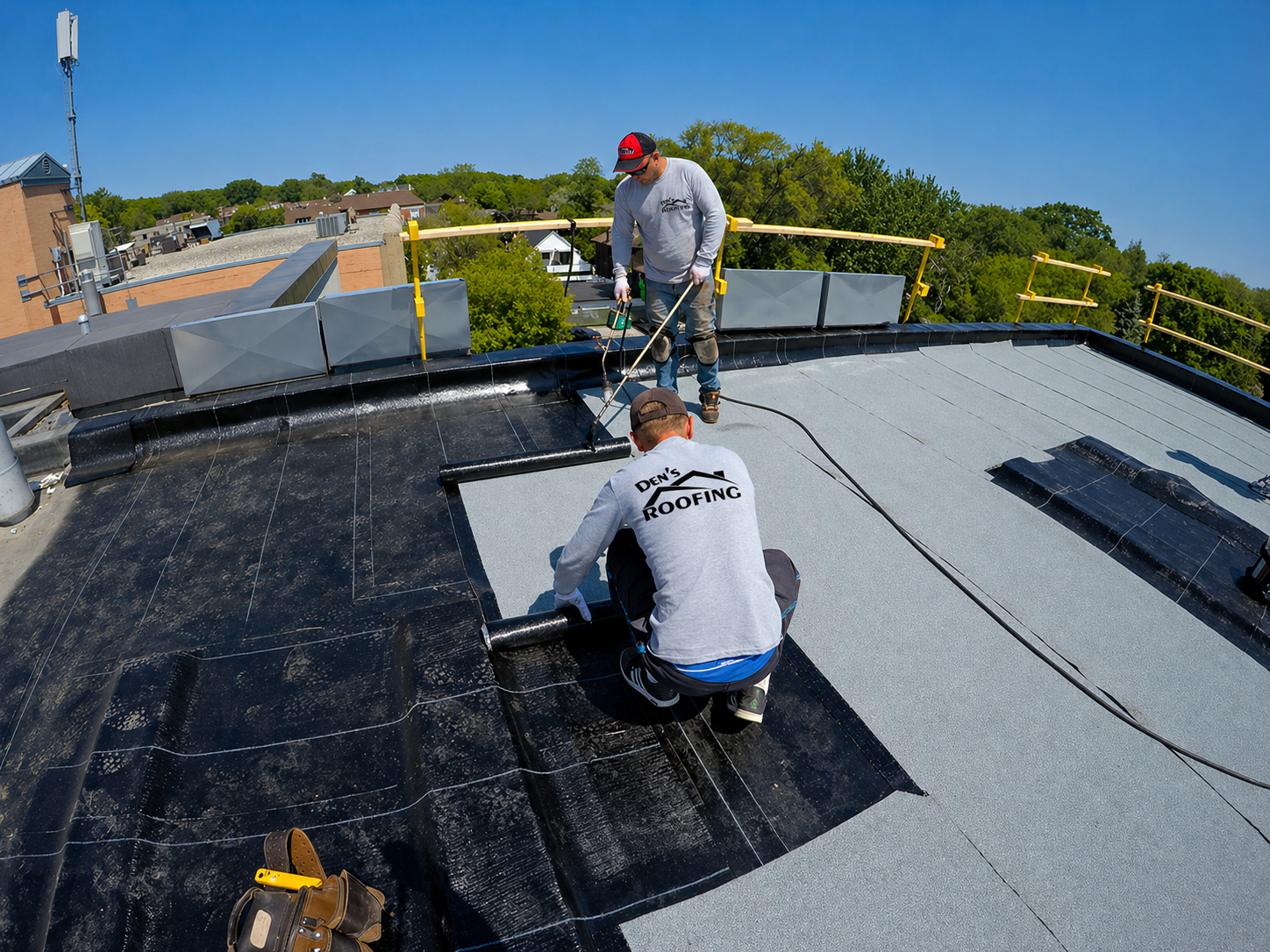

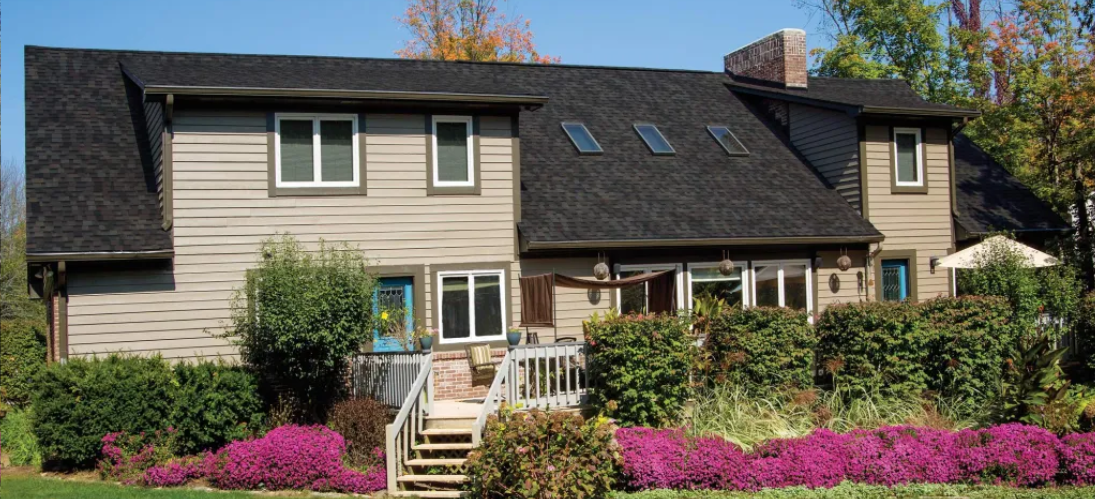
When homeowners look at an asphalt shingle roof, the shingles receive most of the attention. They determine the roof’s visible colour and style, and they provide the primary surface that sheds rain and melting snow.
But shingles are not working alone.
Directly beneath them is another important part of the roofing system that homeowners rarely see: roof underlayment.
Underlayment provides a secondary layer of protection between the shingles and roof decking. Specialized self-adhering ice and water membranes can provide additional protection in particularly vulnerable areas such as eaves, valleys, chimneys, skylights, and other roof penetrations. Roofing manufacturers describe these membranes as an important defence when wind-driven rain or ice-dam water gets beneath the shingle layer.
For homeowners in Orleans, Vanier, and throughout Ottawa, these hidden materials are particularly important because roofs must handle snow, ice, spring thaw, wind-driven rain, and repeated freeze-thaw cycles.
Understanding what is underneath the shingles can make it much easier to understand how a complete roofing system protects a home.
What Is Roof Underlayment?
Roof underlayment is a protective material installed over the roof deck before asphalt shingles are installed.
Depending on the roofing system, products may include traditional asphalt-saturated felt, synthetic underlayment, or specialized self-adhering membranes.
The underlayment sits between:
The roof deck below
and
The asphalt shingles above
Its purpose is to provide another level of protection beneath the visible roof covering.
GAF describes roof deck protection as an underlayment between the shingles and roof deck that provides secondary protection against wind-driven rain.
Because it becomes completely hidden once shingles are installed, many homeowners never think about it again.
Why Shingles Need Backup Protection
Asphalt shingles are designed primarily to shed water down the roof.
When installed properly on an appropriate slope, overlapping shingle courses use gravity to move water toward the eaves.
But unusual conditions can challenge the normal drainage pattern.
Examples include:
- Wind-driven rain
- Ice dams
- Damaged shingles
- Missing shingles after a storm
- Water around roof penetrations
- Concentrated runoff in valleys
Underlayment provides another protective layer if moisture reaches beneath the shingles.
IKO notes that underlayment can help protect the wood roof structure from weather during installation and provide additional protection when ice melts or strong winds drive rain beneath shingles.
Underlayment Is Not a Substitute for Shingles
It is important to understand the role correctly.
Underlayment does not mean damaged shingles can simply be ignored.
The shingles remain the primary water-shedding surface.
Underlayment is secondary protection.
Think of the roof as a layered system rather than a single waterproof surface.
If the outer layer experiences unusual moisture exposure, the layers beneath provide additional defence.
What Is Ice and Water Protection?
Ice and water protection is a specialized type of self-adhering roofing membrane.
Unlike standard underlayment, it adheres directly to the roof deck and is commonly used in locations that face a greater risk of water intrusion.
IKO describes these membranes as polymer-modified bitumen products that bond to the roof deck and can form a seal around roofing nail penetrations.
That characteristic makes them particularly useful in areas where water may move in ways ordinary shingles are not designed to handle.
Why Ottawa Homes Benefit From Ice and Water Protection
Ottawa roofs experience a combination of conditions that make hidden water protection particularly valuable.
During winter, snow may remain on the roof for long periods.
During warmer periods, some of that snow melts.
When meltwater reaches colder roof edges, it may refreeze.
Over time, ice can accumulate near the eaves.
If additional water backs up behind the ice, it can move beneath shingles.
Self-adhering membranes installed beneath the shingles provide another barrier between that water and the roof deck. ARMA specifically identifies self-adhering underlayment as a common form of ice-dam protection at roof eaves.
Eaves Are One of the Most Important Areas
The eave is the lower edge of the roof.
During normal rainfall, water travels over the shingles and leaves the roof at this location.
Winter can change that behaviour.
Ice near the eaves can temporarily prevent water from moving downward.
Instead, water may begin backing up beneath shingles.
This is why eave protection receives so much attention in cold-climate roofing systems.
IKO recommends self-adhering eave protection in climates that experience freezing winter temperatures because of the potential for ice-dam-related water damage.
What Is an Ice Dam?
An ice dam is a ridge or accumulation of ice that develops near a colder portion of the roof, commonly around the eaves.
A typical sequence begins with snow on the roof.
Heat from the home or sunlight causes some snow to melt.
Water moves down the roof.
The lower roof edge is colder.
The water freezes.
More meltwater reaches the same area.
Eventually, the ice can create a barrier.
Water behind that barrier may then move beneath shingles instead of continuing toward the gutter.
Why Shingles Alone May Not Stop Ice-Dam Water
Asphalt shingles work extremely well when water moves in the intended direction: downward.
Ice dams create the possibility of water moving backward beneath the shingle courses.
That is a very different condition.
GAF notes that leak barriers are used at vulnerable areas such as eaves partly because water backup and ice dams can challenge the normal water-shedding function of shingles.
This is where hidden membrane protection becomes particularly valuable.
Roof Valleys Need Additional Attention
Valleys form where two roof slopes meet.
They collect runoff from both surfaces.
That means a valley may carry considerably more water than the open area of a single roof slope.
Valleys may also collect:
- Snow
- Ice
- Leaves
- Twigs
- Organic debris
Because of this concentrated water exposure, valleys are commonly considered important locations for additional water protection. Both ARMA and major roofing manufacturers identify valleys as appropriate locations for self-adhering membranes or leak barriers.
Chimneys Create Another Vulnerable Transition
A chimney interrupts the roof surface.
Water travelling downslope needs to move around the masonry.
Flashing provides the primary protection at this transition, but additional membrane beneath the flashing can provide another level of defence.
This is particularly useful when a chimney:
- Sits low on a large roof slope
- Receives substantial runoff
- Is located near a valley
- Experiences snow accumulation behind it
IKO identifies chimneys as one of the roof penetrations where ice and water protection can be used beneath flashing.
Roof Vents and Plumbing Stacks Need Protection Too
Every roof penetration interrupts the otherwise continuous roofing surface.
Examples include:
- Plumbing stacks
- Exhaust vents
- Skylights
- Certain mechanical penetrations
These locations depend heavily on proper flashing.
Additional membrane beneath flashing can help protect the roof deck if water gets beyond the primary exterior detail.
ARMA identifies vents, skylights, plumbing vent stacks, and chimneys as critical roof locations where self-adhering membranes can provide secondary protection.
Skylights Need Careful Water Management
Skylights create a relatively large opening through the roofing system.
Water must be directed around all sides of the unit.
Snow may also collect above certain skylight configurations.
A successful skylight installation therefore depends on much more than sealing the visible edge.
Flashing and appropriate hidden water protection need to work together.
Lower Roof Slopes Need Special Attention
Roof pitch affects how quickly water drains.
On steeper roofs, gravity moves water away relatively quickly.
On lower slopes, water moves more slowly.
For asphalt shingles installed on lower permitted slopes, manufacturer requirements can call for enhanced underlayment arrangements. IKO’s technical guidance, for example, specifies additional underlayment provisions for certain asphalt shingle applications between 2:12 and 4:12.
The specific installation should always follow the requirements for the roofing product and applicable local code.
Why Roof-to-Roof Transitions Can Be Vulnerable
Some Orleans and Vanier homes have additions, garages, porches, or other sections where one roof slope meets another.
These transitions can create complicated drainage patterns.
A steep upper roof may direct water or snow onto a lower roof.
Water can become concentrated around the transition.
ARMA recommends special attention where one roof slope transitions to a different slope because water may build up in these areas.
Wind-Driven Rain Can Get Beneath Shingles
Rain does not always fall vertically.
During strong storms, wind can push rain sideways and upward.
This can challenge:
- Shingle edges
- Rake edges
- Flashing
- Roof penetrations
If wind-driven rain gets beneath the shingles, underlayment provides another protective layer before water reaches the deck.
GAF specifically identifies wind-driven rain as one of the conditions leak barriers and roof deck protection are intended to help manage.
Underlayment Can Help During Storm Damage
Suppose strong wind removes several shingles.
The roof deck beneath those shingles becomes more exposed to weather.
Underlayment may temporarily provide secondary protection until repairs can be completed.
That does not mean the roof should remain damaged.
Missing shingles still require prompt attention.
But a properly installed underlayment can reduce the vulnerability of the decking underneath.
Underlayment Also Protects During Roof Installation
There is another period when underlayment is particularly valuable: construction.
Once old shingles are removed during roof replacement, the deck is exposed.
Roofing crews typically install protective layers before completing the new shingle system.
IKO notes that underlayment helps protect the wooden roof structure from adverse weather before and during shingle installation.
This is another reason correct sequencing during roof installation matters.
Traditional Felt Underlayment
Asphalt-saturated felt has been used beneath roofing materials for many years.
It can provide secondary protection when correctly installed.
Homeowners may hear terms such as:
- Roofing felt
- Tar paper
- Felt underlayment
Modern roofing systems may instead use synthetic materials, depending on the roof design and manufacturer requirements.
Synthetic Roof Underlayment
Synthetic underlayment has become common in residential roofing.
These products are designed to provide a protective layer over the roof deck before shingles are installed.
Depending on the product, advantages may include:
- Lower weight
- Large roll coverage
- Improved tear resistance
- Easier handling
- Clear installation markings
The appropriate material should be selected according to the roofing system rather than simply choosing based on one characteristic.
Synthetic Underlayment and Ice Membrane Are Not the Same Thing
This distinction is important.
Standard synthetic underlayment typically covers broader roof areas.
Self-adhering ice and water membranes are usually designed for particularly vulnerable locations or specialized applications.
A roof may therefore use both.
For example:
Ice and water protection may be installed around the eaves and valleys.
Synthetic underlayment may cover much of the remaining roof deck.
The exact layout depends on the roof and applicable requirements.
Why Self-Adhering Membranes Are Different
Self-adhering membranes bond directly to the roof deck.
One of their important characteristics is their ability to seal closely around roofing fasteners.
ARMA explains that the polymer-modified asphalt in self-adhering membranes allows the material to adhere to the deck and overlaps while sealing around the shanks of nails penetrating the membrane.
This makes them especially useful where water could potentially back up beneath shingles.
More Membrane Is Not Automatically Better
It might seem logical that covering every inch of the roof deck with a waterproof self-adhering membrane would always provide the greatest protection.
Roof assemblies are more complicated than that.
Self-adhering membranes can act as vapour retarders.
If they are installed over the entire roof deck, attic ventilation and overall moisture management become especially important. ARMA specifically notes that ventilation becomes increasingly important when these membranes cover the entire deck.
The roof needs to be designed as a complete system.
Underlayment Cannot Fix Attic Condensation
Underlayment protects against moisture approaching from the exterior side of the roof.
Attic condensation is different.
If warm, humid indoor air reaches cold roof decking from below, moisture can develop on the underside of the deck.
Exterior underlayment does not correct:
- Excessive indoor humidity
- Ceiling air leakage
- Blocked attic ventilation
- Improper bathroom exhaust
- Insulation problems
Exterior water protection and interior moisture management serve different purposes.
Underlayment Cannot Repair Rotten Decking Either
A protective membrane needs a suitable surface beneath it.
If roof decking has already deteriorated because of long-term leaks or moisture, simply covering it with new underlayment is not an appropriate repair.
Damaged decking should be identified and corrected before the new roofing system is installed.
Otherwise, new roofing materials are being placed over an existing hidden problem.
Why Roof Deck Condition Matters
The roof deck supports:
- Underlayment
- Shingles
- Fasteners
- Flashing details
It therefore needs to be stable and structurally appropriate.
During roof replacement, removing old shingles provides an opportunity to examine areas that were previously concealed.
Any significant moisture deterioration can then be addressed before new protective layers cover the deck again.
Installation Quality Is Just as Important as Material Quality
Even a high-quality underlayment needs to be installed correctly.
Potential installation concerns can include:
- Incorrect overlaps
- Wrinkles
- Poor fastening
- Damaged material
- Improper sequencing
- Inadequate coverage at vulnerable areas
Water-management layers work because they overlap in a deliberate direction.
The goal is to continually direct water toward the exterior rather than allowing it behind the next layer.
Overlaps Matter
Roofing materials are generally installed from the lower portion of the roof upward.
This allows upper layers to overlap lower layers.
Water travelling downward therefore remains on top of the system.
Incorrect overlaps can create pathways that direct water underneath protective materials.
This basic principle applies to shingles, underlayment, flashing, and many other roof components.
Drip Edge and Underlayment Must Work Together
Drip edge is the metal installed along roof edges to help direct water away from decking and fascia.
Its relationship with underlayment depends on where it is located and the roofing system being installed.
Correct sequencing helps make sure wind-driven rain and normal runoff move outward rather than underneath protective layers.
IKO and GAF both provide installation guidance showing how drip edge, ice protection, and underlayment are layered at eaves and rake edges.
Why Orleans Homes Benefit From Hidden Water Protection
Orleans contains homes with many different roof configurations.
Some have straightforward gable roofs.
Others include:
- Attached garages
- Dormers
- Valleys
- Lower roof sections
- Multiple roof planes
- Skylights
Every change in roof geometry affects how water and snow move.
Homes with several valleys or lower roof sections can have more areas where enhanced hidden protection deserves attention.
Vanier’s Established Homes May Have Older Roofing Assemblies
Vanier includes many established properties that may have undergone several roof replacements.
An older home might have:
- Board-style roof decking
- Previous flashing repairs
- Multiple roof modifications
- Added ventilation
- Rebuilt chimneys
- Newer additions
The visible shingles may be relatively recent while some underlying components have a much longer history.
Roof replacement provides an opportunity to evaluate those hidden layers.
Previous Roofing Work Matters
Homeowners purchasing an existing property may not know exactly what was installed beneath the shingles.
Unless installation records are available, it can be difficult to determine:
- Underlayment type
- Ice membrane coverage
- Previous deck repairs
- Valley protection
- Flashing details
A professional inspection can evaluate the visible condition, but some hidden components may only become fully apparent when roofing materials are removed.
Why Cheap Roofing Quotes Need Careful Comparison
When comparing roof replacement estimates, homeowners sometimes focus almost entirely on the shingle brand and final price.
That can overlook important differences.
A roofing proposal should make clear what is being installed beneath the shingles.
Questions worth asking include:
- What underlayment will be used?
- Where will ice and water protection be installed?
- How will valleys be protected?
- How will chimneys and vents be detailed?
- What happens if damaged decking is discovered?
- How are roof edges protected?
Two estimates that appear similar may involve very different roofing assemblies.
Hidden Materials Can Influence Long-Term Performance
The shingles are visible every day.
The underlayment is visible only briefly during installation.
Yet both contribute to roof performance.
A well-designed roofing system should manage water in layers.
If the outer layer is temporarily challenged, the next layer helps protect the roof deck.
That redundancy is especially valuable in a climate where ice and wind can occasionally push water in directions it normally would not travel.
Ice and Water Protection Does Not Eliminate Ice Dams
This is another important distinction.
An ice and water membrane helps protect the roof if water backs up beneath shingles.
It does not necessarily prevent the ice dam from forming.
Ice-dam prevention may involve:
- Attic air sealing
- Insulation
- Ventilation
- Snow conditions
- Roof geometry
The membrane is protection against potential water intrusion, not a complete solution to the cause of ice dams.
Spring Snowmelt Tests Hidden Roofing Layers
Spring is one of the most demanding times for Ottawa roofs.
Snow that accumulated gradually can melt quickly.
Water moves through:
- Roof valleys
- Eaves
- Gutters
- Flashing
- Roof transitions
If exterior shingles were damaged during winter, properly installed underlayment may provide additional protection.
Spring leaks can also reveal locations where hidden water-management details have deteriorated or were installed incorrectly.
Fall Is a Good Time to Check the Visible System
Homeowners cannot inspect underlayment without removing shingles.
They can, however, maintain the components protecting it.
Before winter, check for:
- Missing shingles
- Damaged shingles
- Debris-filled valleys
- Gutter blockages
- Flashing deterioration
- Damaged roof edges
Keeping the primary roofing surface in good condition reduces the likelihood that hidden protective layers will ever need to act as the last defence.
Underlayment Can Be Damaged During Roof Work
Roof-mounted equipment, repairs, and penetrations need careful installation.
If roofing materials are removed or modified, the underlayment beneath may also be affected.
Any new penetration through the roof should be properly integrated with the complete water-management system rather than relying only on surface sealant.
Sealant Is Not a Replacement for Proper Layering
Roofing sealant has useful applications, but it should not substitute for correct flashing and underlayment.
A durable roof uses overlapping layers to manage water.
Heavy reliance on exposed sealant can create maintenance problems as the material ages and moves with changing temperatures.
Proper roofing details are designed so gravity does most of the work.
Hidden Protection Can Help Prevent Expensive Interior Damage
Once water gets through the roof deck, the repair may no longer involve only roofing.
Moisture can affect:
- Attic insulation
- Rafters
- Ceiling drywall
- Paint
- Electrical components
- Interior finishes
A relatively inexpensive hidden roofing layer can therefore play an important role in preventing much more expensive secondary damage.
When Should Underlayment Be Replaced?
Underlayment is generally evaluated as part of a roof replacement or significant roofing repair.
Because it sits beneath the shingles, replacing it typically requires removal of the roofing material above.
When a complete asphalt shingle roof is replaced, the underlying roofing assembly should be evaluated rather than assuming old hidden materials should remain indefinitely.
Can Underlayment Be Repaired Locally?
In some localized roof repairs, damaged underlayment can be addressed as part of the repair area.
The shingles above must usually be removed or carefully accessed.
The correct approach depends on:
- Location
- Extent of damage
- Roof age
- Shingle condition
- Existing membrane
- Cause of the problem
Professional evaluation is appropriate because the repair must maintain proper overlaps with surrounding materials.
Roof Replacement Is the Best Time to Ask Questions
Homeowners may never have a better opportunity to understand their roof than during replacement.
Before new shingles cover everything, ask about:
- Roof decking
- Eave protection
- Valley membrane
- Underlayment
- Flashing
- Drip edge
- Ventilation
Taking installation photographs can also provide a useful record of hidden roofing components for future reference.
What Orleans and Vanier Homeowners Should Remember
The most important lesson is simple:
A roof is not just shingles.
The complete system includes layers that most homeowners will never see once installation is finished.
Those hidden layers become particularly important during unusual conditions such as:
- Ice dams
- Wind-driven rain
- Storm damage
- Rapid snowmelt
Selecting appropriate materials and installing them correctly helps protect the roof deck when the visible roofing surface is challenged.
Final Thoughts
Roof underlayment may be hidden, but its role in protecting an Ottawa home should not be underestimated.
For homeowners in Orleans and Vanier, asphalt shingles provide the primary water-shedding surface, while underlayment provides secondary protection over the roof deck. In vulnerable areas such as eaves, valleys, chimneys, skylights, vents, and certain lower-slope sections, self-adhering ice and water membranes can provide an additional level of defence against water that gets beneath shingles.
That protection is especially valuable during Ottawa winters.
Snowmelt can refreeze near roof edges.
Ice dams can cause water to back up.
Strong winds can drive rain beneath vulnerable roofing details.
Storms can damage shingles.
A properly designed roofing system anticipates these possibilities instead of relying on a single visible layer.
Homeowners planning roof replacement should therefore look beyond shingle colour and price.
Ask what will be installed underneath.
Ask how eaves and valleys will be protected.
Ask how penetrations will be flashed.
Ask how damaged decking will be handled.
And make sure the roofing assembly is appropriate for the roof’s pitch, geometry, and local conditions.
The best hidden water protection is the kind homeowners rarely need to think about after installation.
But when Ottawa weather challenges the shingles above it, those unseen layers can become some of the most important components on the entire roof.
Frequently Asked Questions About Roof Underlayment
What is roof underlayment?
Roof underlayment is a protective layer installed between the roof deck and asphalt shingles. It provides secondary protection against moisture that reaches beneath the primary roofing surface.
Is underlayment waterproof?
That depends on the product. Standard underlayments provide secondary water protection, while self-adhering ice and water membranes are designed to provide more robust water resistance in vulnerable areas.
What is ice and water protection?
It is typically a self-adhering polymer-modified bitumen membrane installed directly over the roof deck. These membranes can adhere around nail penetrations and are commonly used where ice dams or water backup present greater risks.
Where is ice and water protection commonly installed?
Common locations include eaves, valleys, chimneys, skylights, roof penetrations, and other vulnerable transitions. Specific requirements depend on the roof, product instructions, and applicable building rules.
Does ice and water membrane prevent ice dams?
No. It helps protect against water intrusion if an ice dam causes water to move beneath shingles. Preventing recurring ice dams may also require attention to attic air sealing, insulation, ventilation, and heat loss.
Can underlayment stop a leak if shingles are missing?
Underlayment can provide secondary protection, but it should not be treated as a permanent exposed roofing surface. Missing or damaged shingles should be repaired promptly.
Do lower-pitched roofs need different underlayment?
They may. Asphalt shingle manufacturers can specify enhanced underlayment requirements for lower permitted roof slopes. The roofing system should follow the particular manufacturer’s installation instructions and applicable local requirements.
Can old underlayment be reused during roof replacement?
The condition and roofing assembly need to be evaluated during replacement. A complete reroofing project provides an opportunity to inspect the deck and install protective layers appropriate for the new roofing system.
Is synthetic underlayment the same as ice and water membrane?
No. Synthetic underlayment commonly provides broad secondary roof-deck protection, while self-adhering ice and water membranes are typically used for enhanced protection in particularly vulnerable locations.
Why should homeowners care about something they cannot see?
Because hidden roofing layers help protect the roof deck and home interior if water gets beyond the shingles. Correctly installed secondary protection can help prevent a small exterior problem from becoming expensive structural or interior water damage.